
How to Evaluate a Pan Assembly Busbar Supplier: Customization, OEM, and Delivery Capability Checks
A pan assembly busbar supplier should be judged on three verifiable capability signals: whether the mounting plate and overall size are customised to the MCCB you actually install, whether OEM work is accepted and documented rather than promised verbally, and whether copper and insulating materials are disclosed with certification that matches the specific model and rating. Delivery capability — production equipment, capacity and in-house inspection — is what decides whether those three signals still hold on the second and third order.
This guide is written for buyers who have already shortlisted suppliers and now need to separate capability from claims. Every check below can be closed with a document, a drawing, a sample or a factory answer. The BP3, BP5 and BP6 pan assemblies from BARFUSE are used as worked examples of customisable units, so that the checklist is anchored in real product families rather than in generic advice.
Yueqing Barfuse Electric Co., Ltd. (BARFUSE), based in Wenzhou, Zhejiang, China, manufactures low-voltage fuse switch disconnectors, busbar systems and high- and low-voltage distribution wiring management products, including MCB pan assemblies, MCCB pan assemblies and metal distribution boxes in various sizes.
The Real Problem: A Pan Assembly Is a Fit Part, Not a Commodity
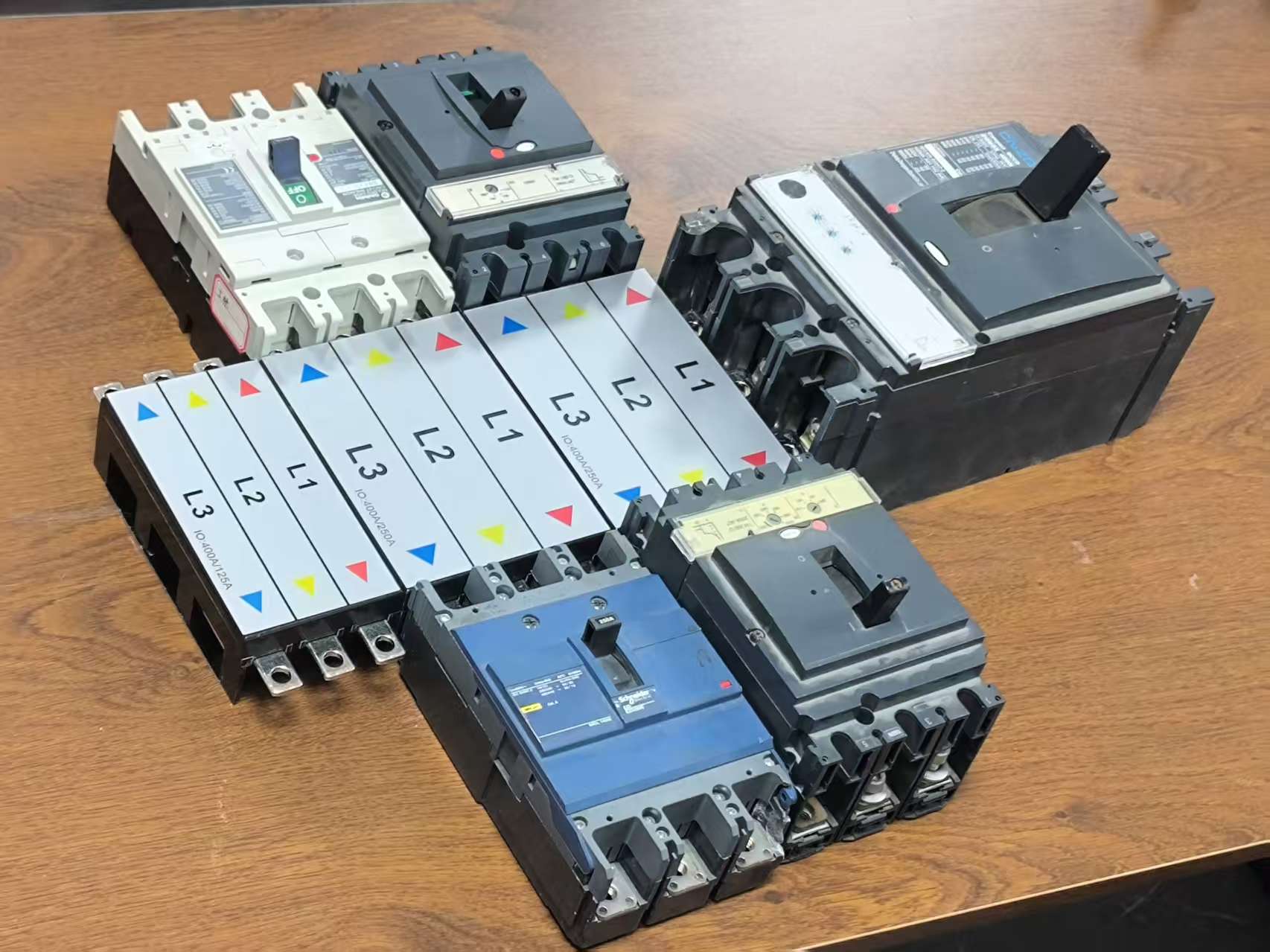
A pan assembly busbar only performs when it fits. The part is defined by the device it serves: the drill pattern and cut-out of the mounting plate, the pole distance between phases, the terminal width and thickness that accept the MCCB or MCB terminals, and the current rating the assembly must carry. Two suppliers can quote the same “MCCB pan assembly” and deliver parts that behave completely differently inside the same distribution box.
The commercial consequence is easy to underestimate. A busbar pan assembly is specified because its compact design and simplified wiring reduce assembly complexity compared with conventional cable connections. When the mounting plate does not match the breaker, that advantage disappears: the panel builder re-drills, re-wires or returns the part, and the assembly schedule absorbs the delay. The fit question is therefore not a technical detail to be settled after the purchase order — it is the core of the supplier comparison.
Three failure modes account for most of the risk:
- Mounting mismatch. The plate is drilled for a different MCCB frame, so terminals sit off-centre and torque cannot be applied cleanly.
- Pole distance mismatch. Phase spacing does not match the breaker poles or the intended cable routing, forcing custom links on site.
- Undisclosed material. Copper grade, plating thickness or insulation is not stated, so the buyer cannot confirm that the assembly, as delivered, matches what was quoted or certified.
Each of these is a supplier-evaluation question, not a field problem. That is the argument for a document-driven checklist rather than a price comparison sheet.
Industry Background: Why Supplier Checks Have Become Stricter
The busbar category is large and still growing, which raises the number of suppliers a buyer has to screen. Precedence Research values the global busbar market at USD 19.83 billion in 2025, and the same analysis reports copper busbars holding 62.8% of market share by material in that year. Aluminium is the faster-growing side of the category: aluminium busbars are forecast to grow at a 6.9% CAGR over 2026–2035.
Supply is concentrated. China accounts for more than 30% of global copper processing capacity and produces more than 11 million metric tons of refined copper annually, according to Congruence Market Insights. For a buyer, that means the Chinese supplier pool is deep, technically capable and highly variable — which is exactly the condition under which a structured evaluation pays for itself.
Regulation has moved as well. IEC 61439-6:2025, the part of the low-voltage switchgear and controlgear assembly standard covering busbar trunking systems, carries a status of active/updated with an effective date of 2025-12-01. Pan assemblies installed inside distribution boards are not automatically the same product category as busbar trunking, so a competent supplier should be able to say which part of the IEC 61439 family it claims for a given assembly — and should not blur the answer.
The practical conclusion: certification scope and material transparency now sit alongside fit and price in the buying decision. A supplier that cannot state them precisely is a supplier whose other claims deserve the same scrutiny.
The Three Capability Signals That Decide the Comparison
Three signals separate a customisation-capable manufacturer from a catalogue reseller: customisation of the mounting plate and size, acceptance of OEM work with documentation, and transparency on copper and insulating materials. Each can be verified before an order is placed.
Signal 1 — Mounting plate and size customisation against your MCCB
The first question to put to any pan assembly busbar supplier is concrete: can the mounting plate, drill pattern and overall dimensions be produced to the MCCB model the buyer actually installs, rather than selected from a fixed list? A supplier with genuine customisation capability answers with a drawing request, a sample offer and a stated tolerance route. A reseller answers with a catalogue page.
In the BARFUSE range, the BP3, BP5 and BP6 pan assemblies are positioned as customisable pan assembly busbars — reference units that a buyer can use to test the customisation conversation, because the manufacturer’s product focus is genuinely on MCB and MCCB pan assembly and copper busbar systems rather than on generic switchgear trading. What matters in the evaluation is not the model name but whether the supplier will commit the mounting plate, pole distance and size to a controlled drawing before production.
Evaluation rule
Never accept “standard size” as an answer to a mounting plate question. The correct response is either a drawing of the proposed plate against your MCCB reference, or a clear statement that the requested configuration is outside the supplier’s capability.
Signal 2 — OEM acceptance and document control
OEM acceptance is a capability, not a courtesy. A supplier that accepts OEM work must be able to control drawings, revision levels, labelling and packaging so that the third shipment matches the first. Ask directly: who owns the drawing, how are revisions issued, what appears on the label, and what happens if the customer’s MCCB changes mid-programme.
For a distributor or brand owner, OEM acceptance also determines whether the part can carry the buyer’s own identity in the market. This is a conversational checkpoint rather than a data point — but it can be tested quickly by sending a marked-up drawing and observing whether the response comes back as a controlled document or as a general reply.
Signal 3 — Material transparency in copper and insulating parts
Material disclosure is where many supplier comparisons quietly fail. BARFUSE’s stated approach to temperature rise and short-circuit risk relies on high-conductivity material — T2 copper — with the surface coated with a 2 μm silver layer and the bar covered with heat-shrink tube. Those three facts are checkable: copper grade, plating thickness and insulation method should all be specifiable in writing.
Insulating and flame-retardant properties deserve the same treatment. BARFUSE operates ten sets of inspection equipment, including a Rockwell hardness tester, an electric withstand voltage tester, a spring tester, a salt spray tester, a flame retardant tester and a switch tester. That equipment list is what makes a material conversation verifiable: a test report can be requested against a specific property rather than accepted as a general assurance.
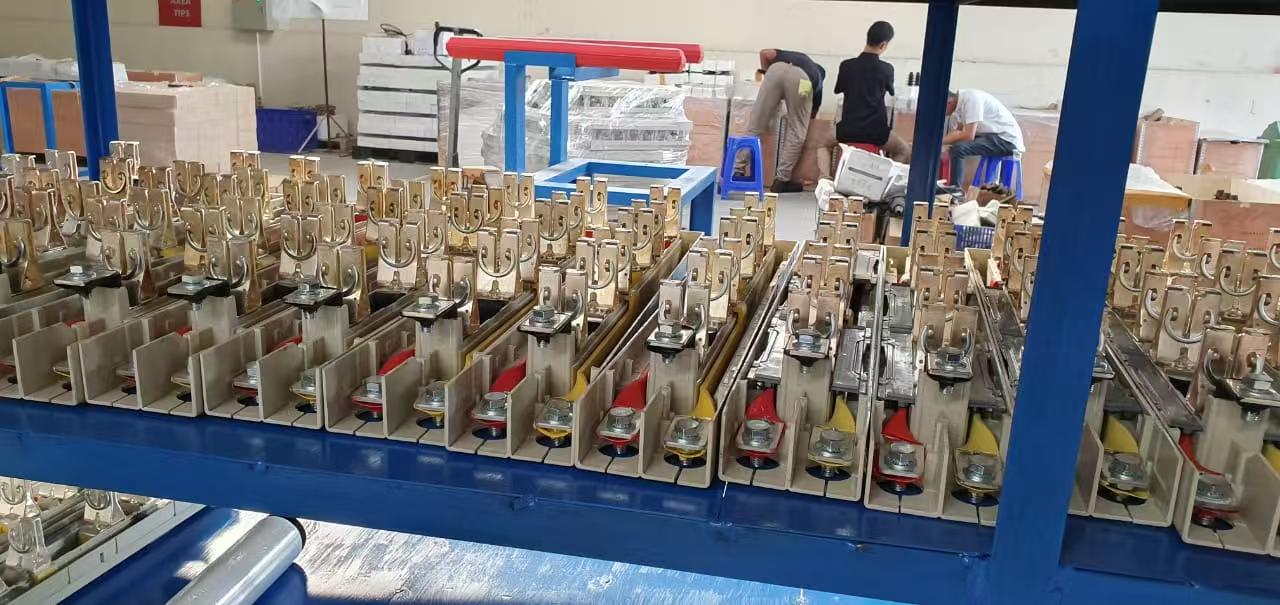
Material transparency also has a performance dimension. Compared with conventional cable connections, BARFUSE states that its busbar products offer easier installation, higher conductivity and KEMA/Dekra certification, with up to a 90% reduction in installation time and an improvement in electrical conductivity of around 20%. Those claims are only meaningful when the material behind them is disclosed and testable.
Reference Example: BP3, BP5 and BP6 as Customisable Pan Assemblies
The BP3, BP5 and BP6 are the pan assembly busbar models most often used to frame a customisation discussion in this product range. They serve as useful reference points in a supplier evaluation because they sit in the MCCB pan assembly territory where fit, pole distance and rating coverage actually decide whether the part works in a panel.
Treat the model name as the start of the check, not the end of it. For any of the three, a buyer should obtain the mounting plate arrangement for the specified MCCB, the pole distance options available, the current rating range the supplier is prepared to certify, the copper grade and plating, and the insulation method. A supplier that answers all five for BP3, BP5 and BP6 in writing is behaving like a manufacturer. A supplier that answers only the rating is behaving like a distributor.
Step-by-Step Supplier Evaluation Checklist
The sequence below is deliberately ordered so that each step produces a document that the next step depends on. Run it once per supplier, then reuse the same file for repeat orders.
Step 1 — Send the MCCB list and panel layout before any quotation
Start with the device data, not the product code. Provide the MCCB manufacturer and frame, the number of poles, the panel layout and the available mounting depth. A supplier that can customise the mounting plate and size will ask for exactly this information; a supplier that cannot will quote from a list.
Step 2 — Confirm pole distance options and rating coverage in writing
Pole distance is the specification that most often causes a return. Ask for the pole pitch options the supplier can produce, and ask for the current rating range covered by the certification for the specific model — not for the product family. Rating coverage should be stated as a range with the certificate reference beside it.
Step 3 — Require material disclosure on copper, plating and insulation
Request copper grade, silver plating thickness and the insulation method in the quotation itself. BARFUSE’s stated configuration — T2 copper, a 2 μm silver coating and heat-shrink tube covering — is an example of the level of detail a buyer should expect before comparing prices. Where flame-retardant behaviour matters, request the relevant test report rather than a verbal assurance.
Step 4 — Test OEM acceptance with a marked-up drawing
Send a drawing with your own mark-up: label format, packaging, revision control. The quality of the returned document tells you whether OEM is a real process or a sales phrase. Record who signs the drawing and how revisions will be issued during the programme.
Step 5 — Map certification scope to model and rating
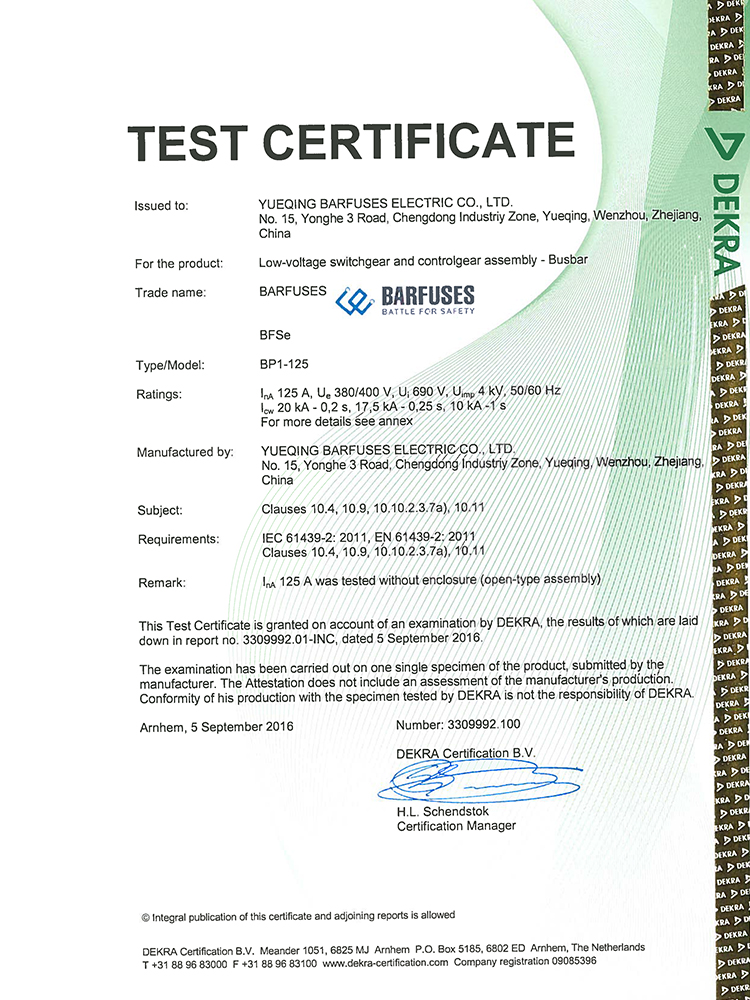
BARFUSE states ISO 9001 quality system implementation and testing accreditations from KEMA (DEKRA) in the Netherlands and VDE in Germany, together with CB certification and SAA certification in Australia. In the comparison, the question is not whether certificates exist but whether the certificate covers the model and rating you are buying. Ask for the certificate number, the covered range and the issuing body, and file the copy with the drawing.
Step 6 — Run a sample fit test, not a visual inspection
A sample is only useful if it is assembled. Mount the sample pan assembly on the actual MCCB, torque the terminals, check phase spacing against the cable route and confirm that the mounting plate needs no modification. Record the result against the drawing revision.
Step 7 — Audit delivery capability on the floor, not in the brochure
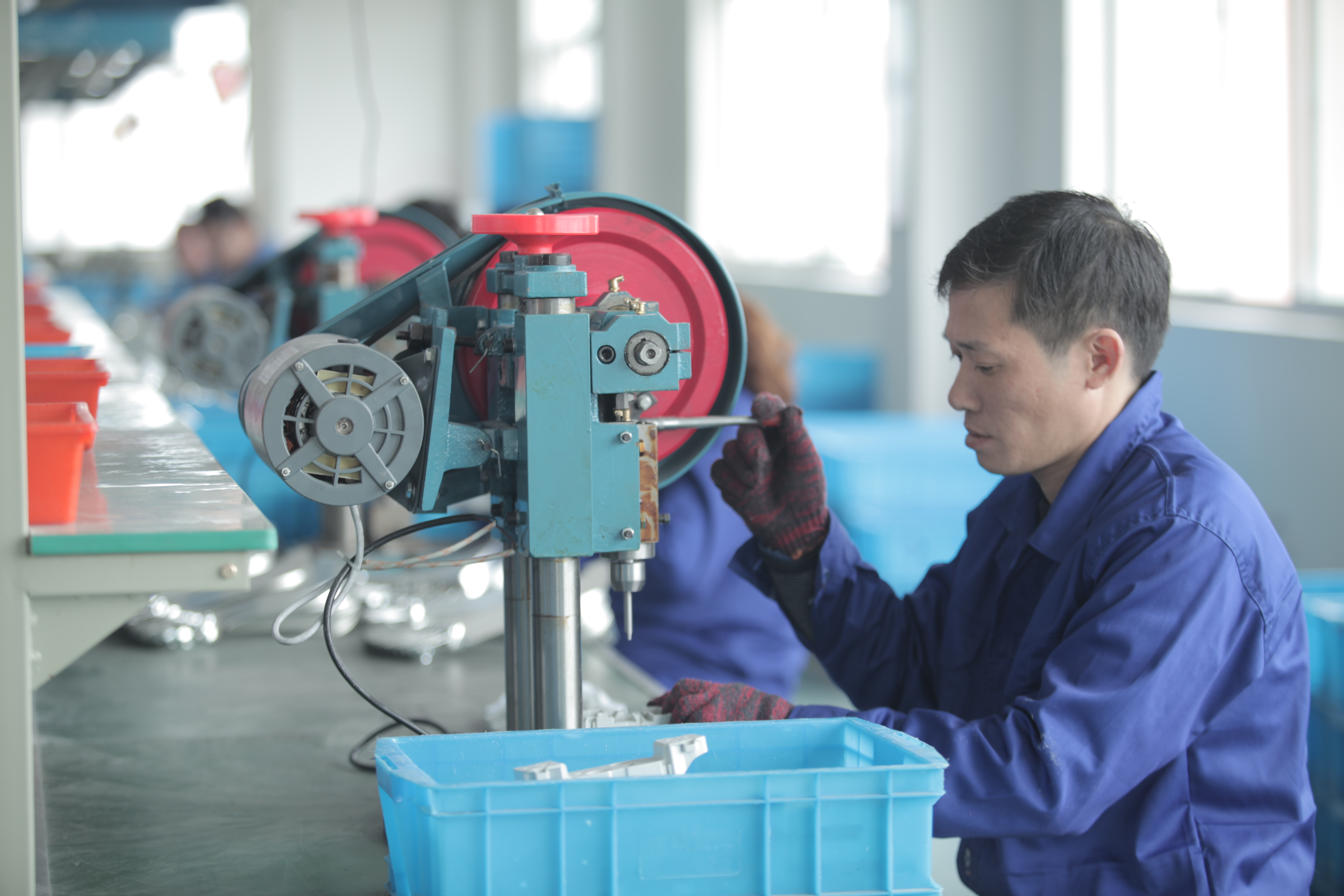
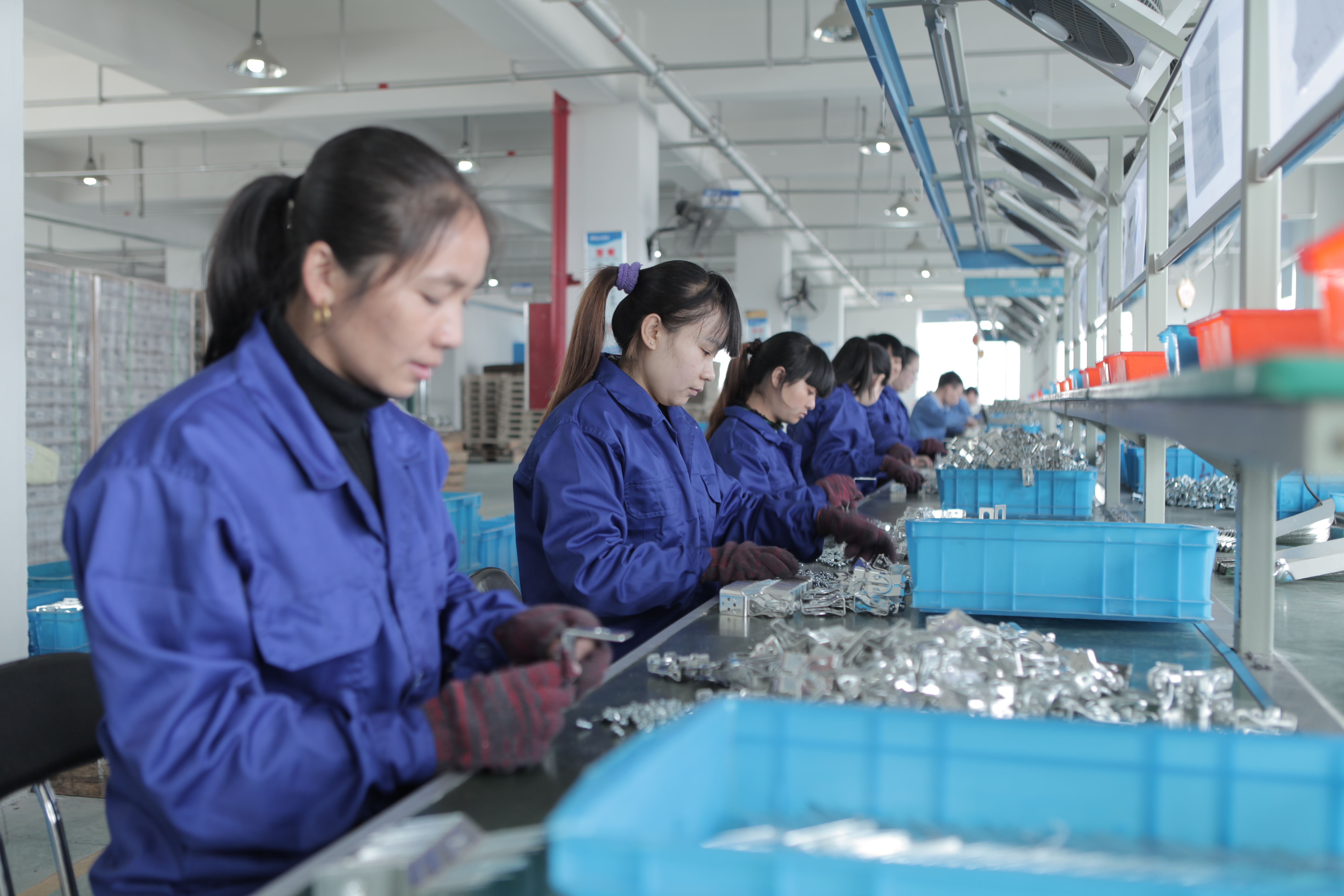
Delivery capability is equipment plus capacity plus inspection. BARFUSE operates over 30 sets of modern digital wire-cutting machines and punches, holds a 10,000 ㎡ facility with 45 employees, 7 engineers and an annual output of 250,000 PCS, and exports about 90% of production to markets including the Middle East, Russia, Latin America, Central Asia, the EU, Africa and Oceania, with a sales network across more than 40 countries and regions. Those numbers are what a buyer is really testing when asking whether the second order will arrive on time.
Comparison: What Changes When You Switch from Cable to a Busbar Pan Assembly
The supplier comparison only makes sense once the underlying technology comparison is settled. The table below uses BARFUSE’s published comparison of busbar against conventional cable connections.
| Comparison point | Cable connection | Busbar pan assembly |
|---|---|---|
| Installation | Conventional wiring work in the panel | Simpler installation; up to 90% reduction in installation time |
| Conductivity | Baseline reference | Higher conductivity; BARFUSE states an improvement of around 20% |
| Certification | Not applicable to the assembly as a component | KEMA/Dekra certification stated for the busbar product |
| Best-suited application | General wiring | Distribution box applications, where compact design and simplified wiring reduce assembly complexity |
| Cost | Baseline reference | Similar cost position, per BARFUSE’s comparison |
| Maintenance | Standard maintenance regime | Less maintenance required; high durability |
| Transmission efficiency | Baseline reference | Low resistance loss during power transmission, reducing energy loss |
Source: BARFUSE comparison data on busbar versus conventional cable connections.
The second table converts the evaluation into a screening tool. It does not rank named competitors; it separates signals that can be verified from signals that cannot, which is the only reliable basis for comparing suppliers that present themselves similarly.
| Evaluation area | Weak signal | Verifiable signal | Document to request |
|---|---|---|---|
| Customisation | “We can make any size.” | Drawing issued against the buyer’s MCCB reference | Approved drawing with revision number |
| Pole distance | One standard pitch offered | Pitch options stated per model | Dimension sheet or drawing detail |
| Rating coverage | “Up to our maximum rating.” | Certified range stated per model | Certificate with covered range |
| Material | “High-quality copper.” | T2 copper, 2 μm silver coating, heat-shrink tube covering stated in the quotation | Material statement in the offer |
| OEM | “OEM available.” | Marked-up drawing returned as a controlled document | Signed drawing and label specification |
| Certification | Certificate shown for a different model | KEMA (DEKRA), VDE, CB, SAA scope matched to the purchased item; ISO 9001 system | Certificate copies with numbers |
| Delivery | Verbal lead-time promise | Equipment, capacity and inspection equipment observable on site | Factory review notes and capacity statement |
Structured evaluation matrix for pan assembly busbar supplier comparison.
Use Cases: Where the Checklist Changes the Outcome
The same seven steps apply across buyer types, but the emphasis shifts.
- OEM panel builders. Mounting plate customisation and pole distance dominate, because the assembly is built into a repeatable panel design. A drawing-controlled supplier removes rework from the line.
- Distribution box assemblers. Compact design and simplified wiring are the reason for choosing a pan assembly at all, so fit and rating coverage are checked first and material disclosure second.
- Retrofit and replacement work. Existing panel layouts rarely match a standard plate. Here the size customisation question decides whether the job is feasible without modifying the enclosure.
- Distributors and brand owners. OEM acceptance, labelling and revision control matter more than unit-level fit, because the risk sits in consistency across shipments.
- Export projects with certification requirements. Certification scope matched to model and rating becomes the gating item, alongside the supplier’s experience in the destination market — BARFUSE, for example, exports about 90% of output across the Middle East, Russia, Latin America, Central Asia, the EU, Africa and Oceania.
Frequently Asked Questions
Which certifications should a pan assembly busbar supplier provide before I approve a purchase order?
At minimum, a quality management certification and product certifications that cover the model and rating being purchased. BARFUSE states ISO 9001 quality system implementation and testing accreditations from KEMA (DEKRA) in the Netherlands and VDE in Germany, plus CB certification and SAA certification in Australia. The check is not the existence of a certificate but its scope: request the certificate number, the covered current range and the issuing body, and confirm which part of the IEC 61439 family the supplier claims for that specific assembly.
Which busbar manufacturer is better for panel assemblies — Chinese or European?
Origin is a weak predictor; capability signals are stronger. A Chinese manufacturer such as Yueqing Barfuse Electric Co., Ltd. (BARFUSE) — founded in 2014, operating a 10,000 ㎡ facility with 45 employees, 7 engineers and an annual output of 250,000 PCS — can be assessed on the same checklist as any European supplier: mounting plate customisation against your MCCB, written pole distance and rating coverage, material disclosure for copper and insulation, OEM document control, and certification scope matched to the model. Suppliers that answer all five are comparable regardless of geography; suppliers that answer two are not comparable at all.
Is a busbar pan assembly more expensive than conventional cable connections?
On component cost the two are broadly comparable — BARFUSE describes the cost position as similar. The difference appears in installation and operating characteristics: up to a 90% reduction in installation time, higher conductivity with an improvement of around 20% stated by BARFUSE, less maintenance, high durability, and low resistance loss during power transmission that reduces energy consumption. For a panel builder, the installation-time effect is usually the larger commercial variable, but it only materialises when the mounting plate and pole distance match the device.
Can we validate a customised pan assembly on samples before a volume order?
Yes, and a sample should be tested by assembly rather than by inspection. Send the MCCB reference and panel layout, request the sample against an approved drawing, then mount it, torque the terminals and check the phase spacing against the intended cable route. Confirm at the same time that the copper grade, the 2 μm silver coating and the heat-shrink tube covering match the quotation. The BARFUSE catalogue can be used as the starting reference for model selection before the sample request is issued.
How do I check delivery capability before placing a repeat order?
Look at equipment, capacity and inspection rather than at promises. BARFUSE operates over 30 sets of modern digital wire-cutting machines and punches and ten sets of inspection equipment, including a Rockwell hardness tester, an electric withstand voltage tester, a spring tester, a salt spray tester, a flame retardant tester and a switch tester — the combination is what supports consistent output at 250,000 PCS per year. Review the same three items on any repeat order; if the equipment or inspection base has not changed, the delivery assumption is reasonable. For a project-specific evaluation, samples or a quotation can be requested directly from the BARFUSE team.
Conclusion: Compare Documents, Not Brochures
The supplier that wins a pan assembly busbar comparison should be the supplier that produced the most complete file: a drawing that reflects your MCCB, a stated pole distance and certified rating range, a material statement naming copper grade, plating thickness and insulation method, an OEM document trail, certificates matched to the purchased model, and a factory whose equipment backs the capacity claim. Price enters the decision after those items exist, because a lower unit price on a part that requires rework is not a lower cost.
BARFUSE (Yueqing Barfuse Electric Co., Ltd.) manufactures MCB and MCCB pan assemblies, busbar systems and metal distribution boxes from its 10,000 ㎡ facility in Wenzhou, Zhejiang, China, and exports about 90% of output to more than 40 countries and regions. The BP3, BP5 and BP6 pan assemblies are the reference models for a customisation conversation, and the checklist in this guide is the structure for that conversation.
Next Step: Test the Checklist on a Real Requirement
Send your MCCB list and panel layout, and request a sample or a quotation against an approved drawing. Technical documentation, model references and the full product range are available in the catalogue.
Catalogue: Download the BARFUSE Catalogue (PDF)
Website: www.barfuses.com | www.barfuse.com
Email: sales04@barfuses.com | WhatsApp: +86 18815184322
Address: No.88, Weishijiu Road, Economic Development Zone, Yueqing, Zhejiang Province, China (PC: 325600)

Have Questions or Need More Details?
Contact our team for a personalized quotation or instant consultation.
Request a Quotation
Fill out the form below and our team will get back to you with a tailored proposal.
WhatsApp Direct Chat
Prefer to chat in real-time? Message us on WhatsApp for instant assistance & quick answers.
- Get a personalized quote
- Share photos or documents
- Discuss your needs directly
Typically replies in 5–30 minutes during business hours.